At the core, museums offer the interpretation to offer people connections to collections. Lonnie Bunch, the museum’s director, says, “What we really want to do is humanize history.” The delivery method matters on one key level. Technology allows for vast off-site interpretation. But, even when visitors are not in the museum, as Karen Franscona, Boston Museum of Fine Arts Director of Public Relations, suggests interpretation still seeks “to explain things and expose our works of art to people who may have never come to our museum.”
Why use Technology-delivered Interpretation?
People use technology. 88 percent of Americans used the Internet, and therefore a form of technology, in 2016. Technology has allowed museums to become global as never before. Now your audience has grown from those who came onsite to those your find your presence (by choice or by surprise). Half of the visitors to the website are not planning a visit, for example. The museum’s largest audience sector might be those who don’t ever visit onsite.
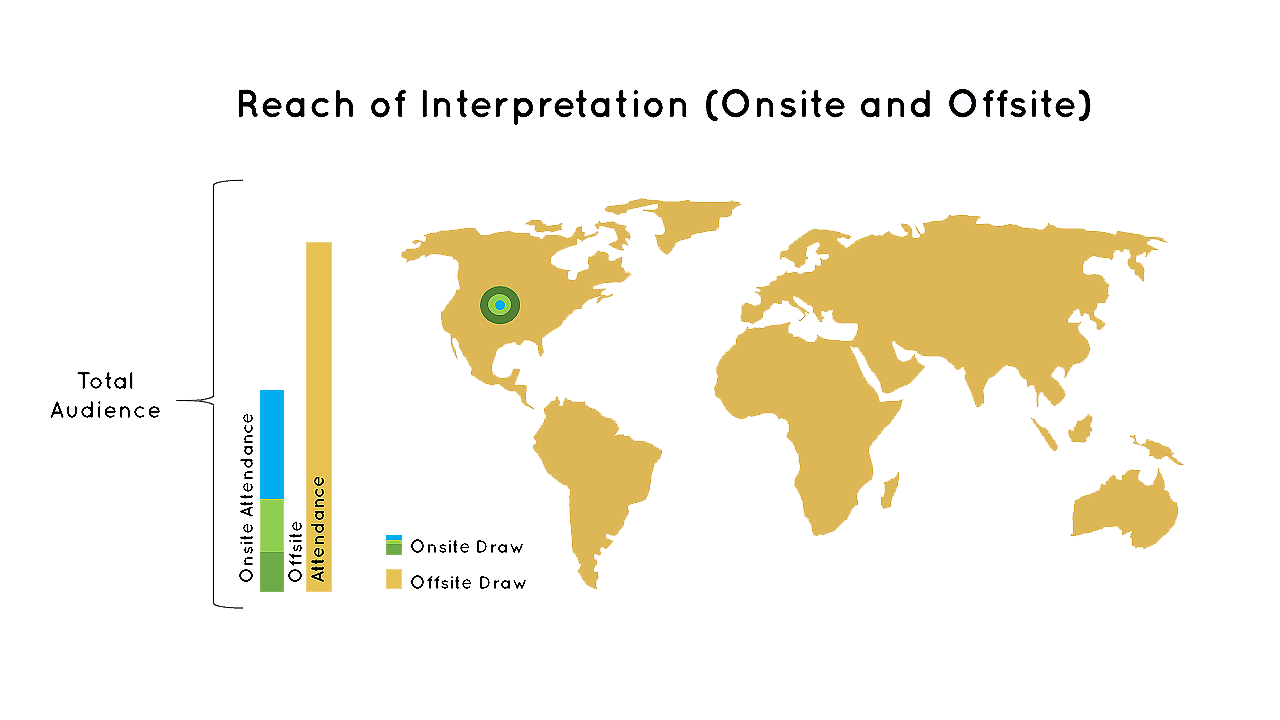
Technology is a utility, not unlike electricity. Just as you use electricity to turn on the light in a classroom or to power your ticketing computers, technology fuels multiple functions of the museum–and multiple parts of our visitors’ lives. They use it to buy plane tickets, read the news, and talk to friends. Technology is not for X, it’s for X,Y,Z. Museums need to meet various needs equally well.
The content on technology has to be as good as anywhere else in the organization if not better. Your audience is particularly knowledgeable about bad content on technology. They use it all the time. Social media can’t be solely a sales channel. That would be the equivalent of a newspaper only being coupon circulars. Interactives can’t just be bells and whistles.
So, start with the idea and the audience.Before we think a little about interpretation for technology, we might go back to the issues of writing labels. Museums create content for multiple audiences. These audiences often have disparate needs.
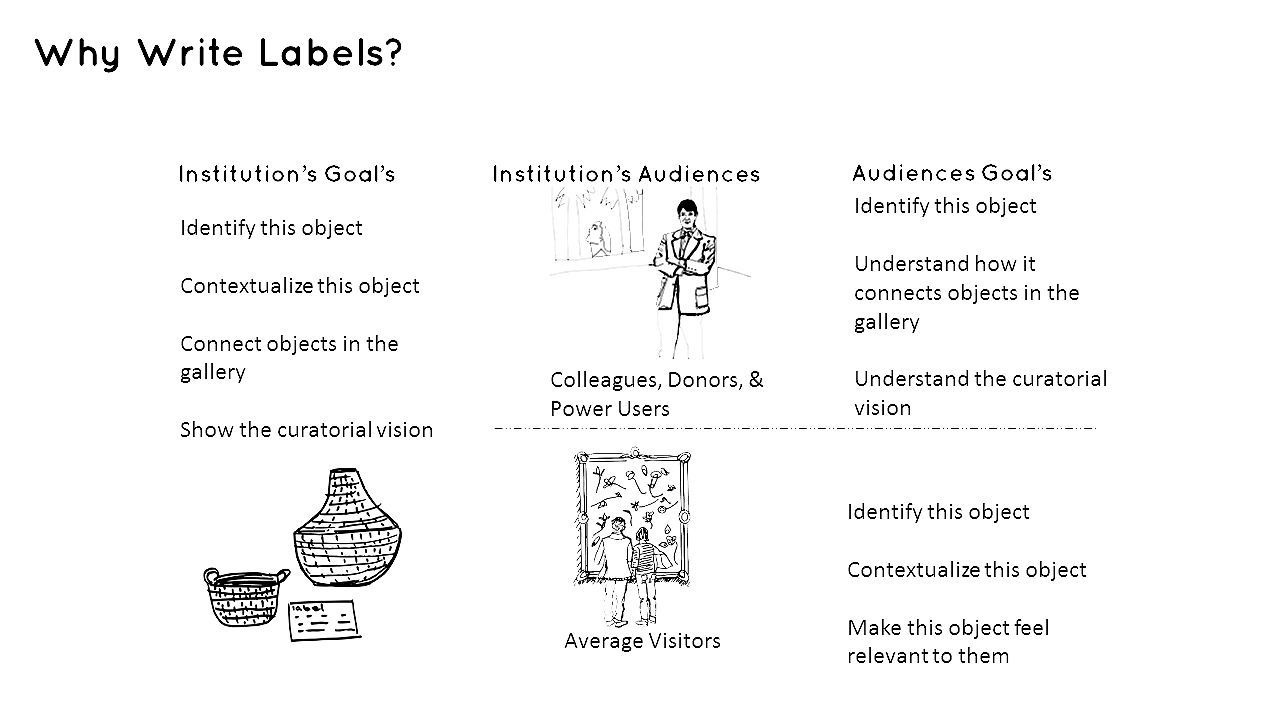
Technology allows you to meet the differentiated needs of visitors better than ever. You can produce content that combines visuals and text in a sophisticated manner. Technology can be updated and more quickly relevant. You can meet respond to current events with incredible speed and specificity.
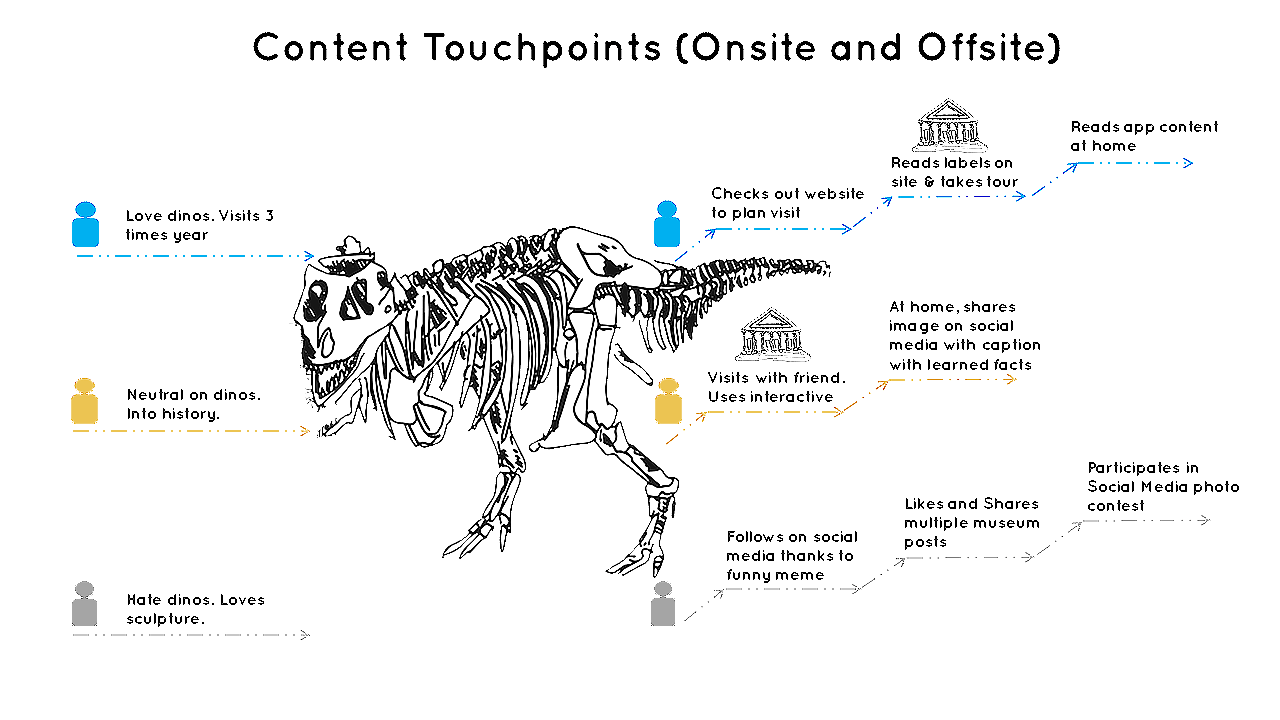
Each of these users can tap into multiple and differentiated engagements with your collection. Digital allows for better differentiation by format for the audience. Personalization is what people want. The visit to the site may be the reason that they are accessing technology-delivered interpretation or the impetus for using your off-site technology resources. They may never visit. Your technology, particularly social media, might reach those who otherwise would never even thinking about your museum.
In other words, technology interpretation can serve your existing audience better or draw new audiences. The numbers can be astonishing. Art Institute of Chicago has about 1.5 million onsite visitors and 706000 on social media. LACMA 1.2 Million onsite and 2 million on social media platforms.
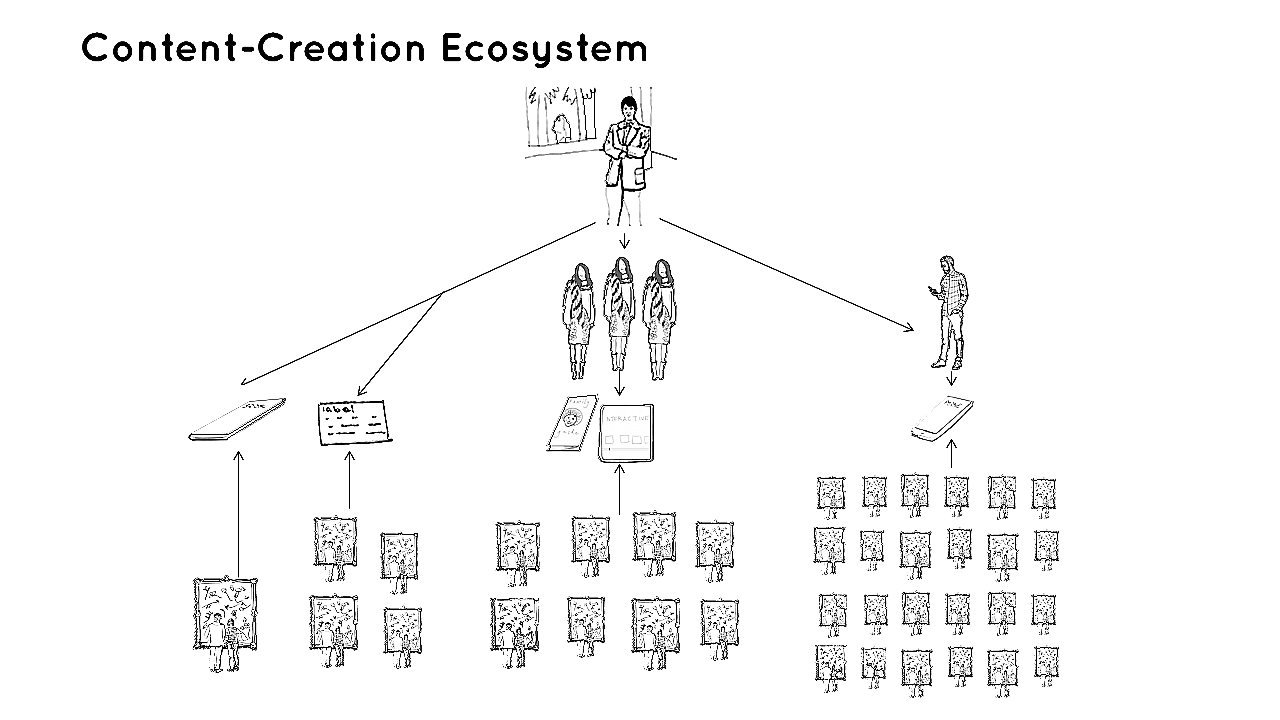
Technology-based interpretation writers, therefore, might have scores more consumers of their ideas than label writers. (Usually, these aren’t the same person). They are all likely using the same source information derived from the curator, say a catalog or curatorial write-up.
How should you use technology-delivered interpretation?
- Create purpose-built content for deployment. Just as you wouldn’t cut the catalog entry from the book to use as a label, don’t use the same text on the web as in social. Remember people consume ideas differently when reading technology. Understand that people’s needs can be different even for the same technology tool. For example, visitors to the website have many needs, so that are different than onsite visitors (such as planning your visit.)
- Create connect that extends relationships. Find ways that encourage people to check back. Show the installation process in phases. Be transparent about testing technology. Make the premature birth of an animal a national obsession. Let technology help your organization be honest with visitors.
- Use each technology tool to its best ability. For example, social media is an engagement tool. Jonas Heide Smith shares in his Museums and the Web paper that social media can maximize reach but also add new levels of engagement within the institution and with new audiences. Think of your own experiences. Do you use your public Instagram to ask your mom to bring you dinner? (Also, don’t ask your mom to bring you dinner.) And, then research numbers on what the general population is doing on different platforms.
- Embrace content co-creation. People are already using technology to make and share content, mostly pictures. Allow them to do so, and then applaud them for it by amplifying their reach through shares on your channels. For example, social media, with “Take-overs” events allow museums to change the balance of power in content creation.
- Don’t assume. Test! Much has been made about the youthful demographics on technology. But, don’t be the museum that assumes that ‘all the kids want X.’ Social media particularly allows you to try many different approaches fairly affordably. You might find that your funny meme is particularly popular with the older folks–they have smartphones too.
- Be Game but Don’t Play Games: Humor is incredibly challenging in print. Think of all those lame jokes that don’t come off in texts from your dad. Museums can certainly speak in the vernacular of the media but do it thoughtfully. Everyone knows when you are pandering. There are scores of examples of brands doing so, so wrong on social. Don’t be those brands.
- Invest. Right now, there are inherent time and money disparities in the field in general, but definitely in content creation. Curators spend years on catalogs and labels and social media needs to turn it around in minutes for pennies on the dollar. Without completely going into the issues with museum hierarchies, let’s focus on digital content. Make a plan that you can afford. Choose the platform that you can staff. And, then do that really well.
Many people have written about this much better than I, so here is also a sampling:
- Russell Dornan, Should Museums have a Personality?
- W. Ryan Dodge, A New Social Media Presence for ROM & I am not a Social Media Guru
- Dana Allen-Greil and the National Archives, Social Media Strategy
- Alli Burness, Tech and Emotions
———-
This is the fifth in a series of posts about considering Interpretation and Content to Meet Today’s Visitor’s Needs.
Previous Posts:
Labels in the World of Information Overload
Interpretation, Content, and the Use of Text in Museums
Visual Literacy and Importance of Imagery in Interpretation (Graphics/ Blog)